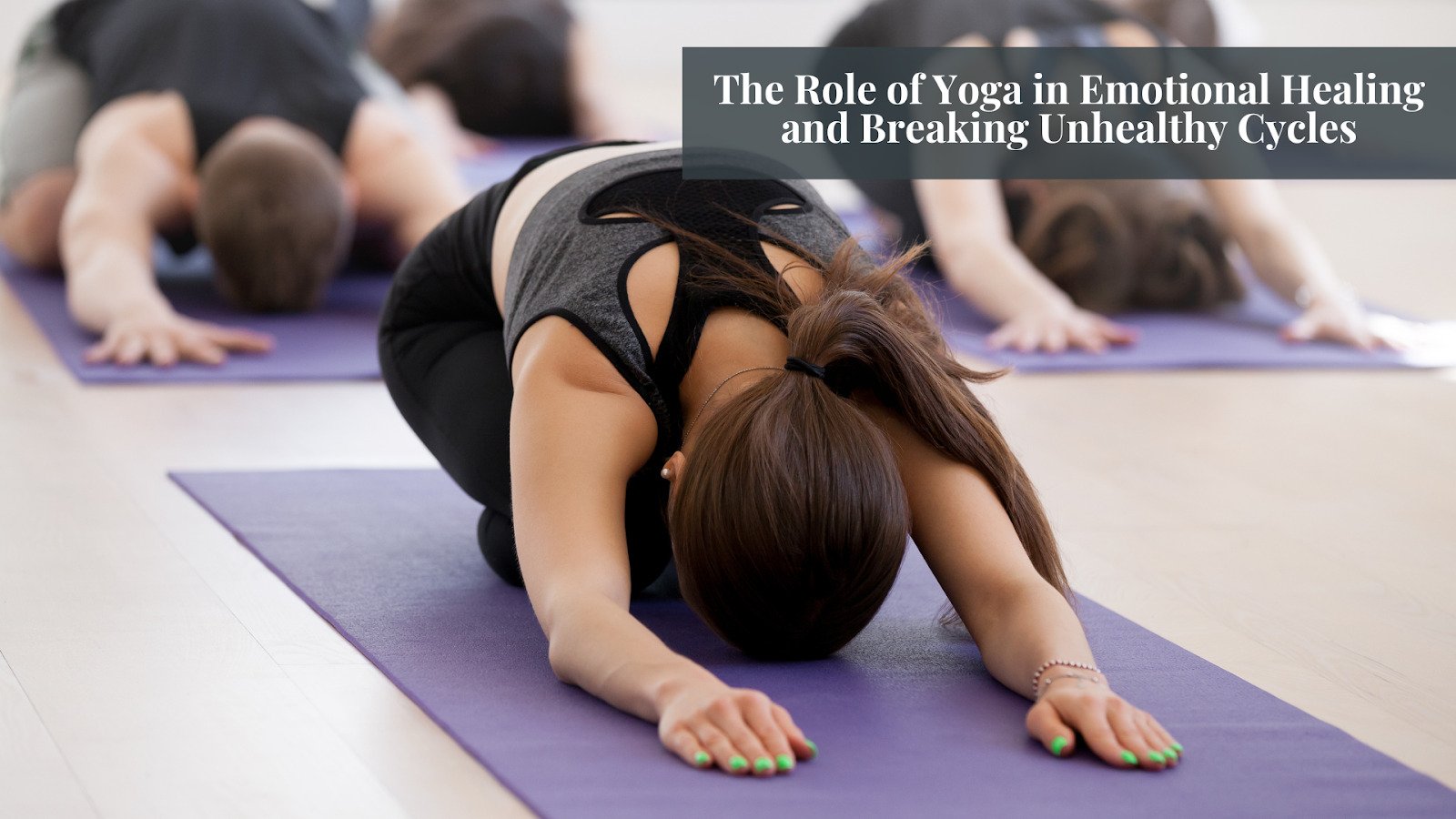
A note before you begin: Yoga can be a genuinely helpful part of emotional healing, and the research supports that. But it works best alongside professional support, not instead of it. If you are dealing with trauma, depression, or persistent emotional distress, please consider speaking with a mental health professional. Yoga can complement that care beautifully; it is not a replacement for it.
Most people view yoga as physical exercise, but the practice is much broader than movement and stretching. It is a holistic discipline that engages the mind, body, and spirit, and that makes it a genuine tool for emotional healing and for breaking unhealthy cycles.
This article looks at how yoga supports emotional wellness, the mechanisms behind it, and practical ways to bring it into your own healing journey.
Understanding Emotional Healing
Emotional healing means addressing emotional pain or trauma. It involves acknowledging and accepting difficult feelings, such as grief, stress and anxiety, or anger, and finding ways to cope with and eventually release them. It is essential for personal growth, wellbeing, and health.
Harmful habits, repeated behavioural patterns, negative thinking, and reactive emotions can pull a person off course and cause ongoing distress. Working through past trauma, anxiety, and stress is central to building a healthier, more productive life.
Breaking Unhealthy Patterns Through Yoga
As you practice yoga, pay attention to the thoughts and feelings that surface during your practice. Use that awareness to notice what may be unhealthy in your life, whether in relationships, work, or how you see yourself. Setting a specific intention before each session, letting go of negative self-talk, or holding a healthier boundary helps turn that awareness into change.
It also helps to bring positive affirmations into your practice. Repeating phrases connected to your healing, such as “I am worthy of love and happiness” or “I release what no longer serves me,” can gradually help shift entrenched negative thought patterns and support emotional resilience.
The key is repetition and gentleness. These patterns took time to form, and they take time to loosen. Yoga offers a regular, low-pressure space to notice them without judgment, which is often where change begins.
How Yoga Supports Emotional Healing
The connection between yoga and emotional wellbeing is not just anecdotal. Research points to several specific mechanisms.
Mind-Body Awareness
Yoga is built on observing the body and mind and noticing how closely they are connected. Through asanas (postures), pranayama (breath control), and meditation, it encourages you to listen to your body and to what you feel emotionally. That awareness can reveal your triggers and patterns, opening the door to reflection and, over time, to release.
Stress Reduction
Stress is one of the main drivers of emotional distress. Yoga eases it through movement, breathing techniques, and relaxation, helping activate the parasympathetic nervous system, the “rest and digest” state that brings the body back toward calm. Research supports this directly: regular yoga practice has been shown to reduce cortisol, the body’s primary stress hormone, and slow, controlled breathing appears to increase vagal tone, a marker of the nervous system’s ability to shift out of fight-or-flight (Simply Psychology, 2026).
Release of Stored Emotions
The body can hold emotion as physical tension, leading to stiffness and discomfort. Yoga uses movement and breath awareness to release that tension. Trauma-related tension is commonly held in the hips, shoulders, jaw, neck, and abdomen, which is why gentle work in these areas can feel emotionally significant, not just physically (Arhanta Yoga, 2025).
Presence and Mindfulness
At its heart, yoga cultivates present-moment awareness without judgment. This lets you observe thoughts and feelings without being swept away by them, which can interrupt the cycle of rumination and reactivity that keeps emotional distress going. That non-reactive stance makes room for acceptance, and acceptance is often where healing starts.
Community and Support
Many yoga classes offer a sense of shared experience and belonging. That quiet camaraderie matters for emotional healing, because connection and the feeling of not being alone are themselves part of recovery.
What the Research Actually Shows
It is worth being clear about the strength of the evidence, because it is genuinely encouraging without being overstated.
Yoga produces measurable changes in the body and brain relevant to emotional health: reduced cortisol, increased GABA (a neurotransmitter linked to calmer mood and lower anxiety), and stronger activity in brain regions involved in emotional regulation (Reachlink, 2026). For trauma specifically, trauma-sensitive yoga has an emerging evidence base, with several randomized controlled trials, including in women with treatment-resistant PTSD, showing significant reductions in symptom severity, with effect sizes comparable to established psychotherapeutic approaches (Simply Psychology, 2026; All The Way Well, 2025).
At the same time, honesty matters. Yoga’s benefits for anxiety, stress, depression, and PTSD are modest to moderate, and it is not a primary treatment for severe psychiatric conditions. It works best as a complement to professional care, or as a bridge toward it, rather than a substitute (Simply Psychology, 2026).
Bringing Yoga Into Your Healing
To make yoga part of your healing, start by finding the style that suits you. They are not all the same:
- Hatha Yoga focuses on physical postures and breath control, and is a gentle starting point
- Yin Yoga uses long-held, passive stretches to promote deep relaxation
- Restorative Yoga centres on gentle, supported movements
- Kundalini Yoga combines movement, breath, and chanting
- Trauma-sensitive yoga is specifically designed for trauma survivors, emphasising choice and control. If you are working through trauma, look for a trauma-informed instructor, as this makes the practice both safer and more effective (Greater Boston Behavioral Health, 2024).
A few practical points:
Practice regularly. Two to three sessions a week, gradually building in length and depth, is a realistic starting rhythm.
Use your breath. Breathwork is one of the most powerful tools for self-regulation, and it is available to you any time, not just on the mat.
Include meditation. Even five minutes a day of mindfulness meditation or guided visualisation can shift your emotional state. It pairs naturally with the physical practice.
Listen to your body. Yoga is personal. Honour your limits, modify poses when you need to, and treat the practice as self-care rather than performance. That relationship with your own body is part of the healing.
Conclusion
Yoga supports emotional healing through several genuine mechanisms: mind-body awareness, stress reduction, the release of stored tension, present-moment mindfulness, and community. The research backs these up, particularly for stress, anxiety, and trauma, while also reminding us that yoga works best alongside professional support rather than in place of it.
Whether you are an experienced practitioner or completely new, healing through yoga is a journey rather than a destination. Approach it with patience and compassion, give it time, and let it be one supportive part of a fuller path toward emotional wellbeing.
And if you are carrying something heavy, please remember that reaching out for professional help is a strength, not a failure. Yoga can walk alongside that support wonderfully.
Frequently Asked Questions
How does yoga contribute to emotional healing?
Yoga supports emotional healing by strengthening the mind-body connection, reducing stress and cortisol, activating the body’s relaxation response, and creating a non-judgmental space to notice and release difficult emotions. Research shows measurable effects on stress hormones and brain regions involved in emotional regulation.
Can beginners practice yoga for emotional healing?
Yes. Beginners can start with gentle styles such as Hatha or Restorative yoga, focusing on breathwork and mindfulness rather than difficult postures. The emotional benefits come from awareness and regulation, not from advanced poses.
How often should I practice yoga for emotional healing?
Two to three times a week is a good starting point, gradually building in length and depth as it becomes a habit. Consistency matters more than intensity, and even short, regular sessions help.
Is yoga a replacement for therapy?
No. Yoga is a valuable complement to professional mental health care, and research supports its benefits for stress, anxiety, and trauma, but it is not a substitute for therapy, especially for trauma, depression, or severe conditions. It works best used alongside professional support.
What kind of yoga is best for trauma?
Trauma-sensitive yoga, which emphasises choice, control, and safety, has the strongest evidence base for trauma survivors. If you are working through trauma, practising with a trauma-informed instructor is both safer and more effective than a general class.