Few scientific institutions have played a more influential role in modern astronomy than the Center for Astrophysics. Known for decades simply as the CfA, the organization represents one of the largest and most diverse concentrations of astronomical expertise in the world. Its researchers have been responsible for some of the most critical discoveries in astrophysics, stellar astronomy, cosmology, planetary science, and space exploration, continuously advancing the boundaries of human knowledge regarding the universe.
Today officially known as the Center for Astrophysics | Harvard & Smithsonian, the institution combines the massive scientific resources of Harvard University and the Smithsonian Institution. Established through a formal agreement signed on July 1, 1973, by Harvard President Derek Bok and Smithsonian Secretary S. Dillon Ripley, the Center has evolved into a global research enterprise. It now employs hundreds of astronomers, physicists, engineers, educators, software specialists, and support personnel who work across a broad range of scientific disciplines to decode the mysteries of the cosmos.
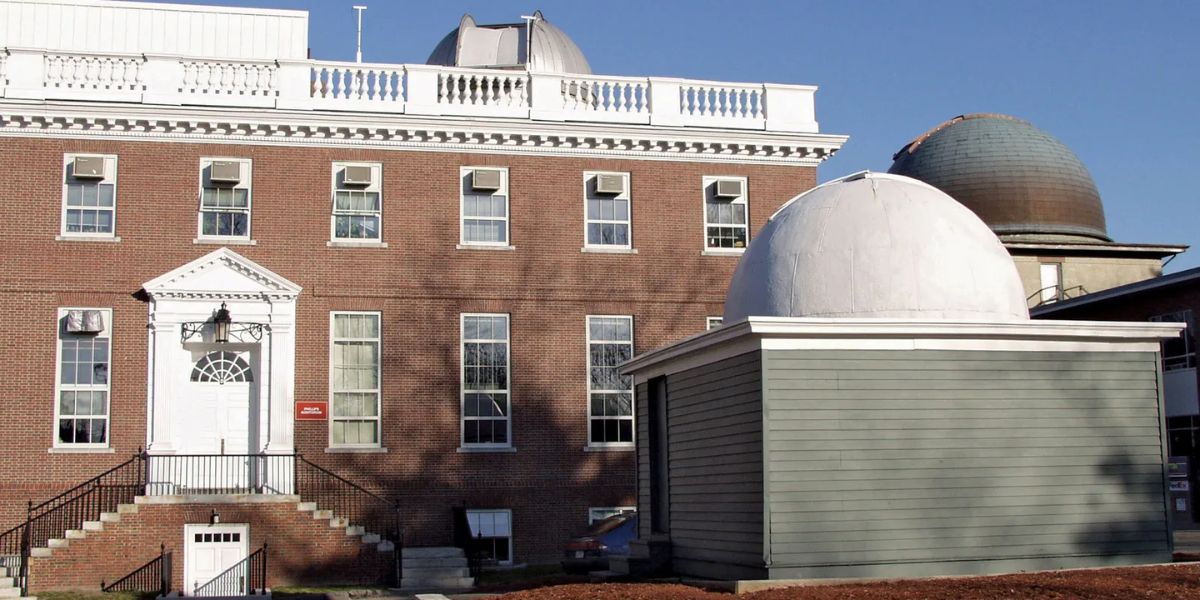
The institution traces its roots to two historic organizations that fundamentally shaped the landscape of American science. The Harvard College Observatory, founded in 1839, and the Smithsonian Astrophysical Observatory, established in 1890, each contributed to the development of modern astronomy. Together, they produced generations of influential scientists, pioneered ground-breaking instrumentation, and established the observational foundations for countless space missions and global observatories.
Current research at the Center spans an enormous scientific spectrum. Scientists here lead investigations into the search for habitable exoplanets, the mechanics of black holes, the behavior of dark matter, the evolution of galaxies, the formation of cosmic structures, stellar physics, and the ultimate origins of the universe.
Institutional Overview
The Center for Astrophysics operates as a unique partnership between Harvard University and the Smithsonian Institution. Unlike a traditional university department or a singular government laboratory, the organization combines academic research, engineering development, observational astronomy, and public outreach under a single administrative structure. This hybrid model allows for a rare integration of theoretical work and applied technology.
The Center manages its operations through the following core framework:
- Official Name: Center for Astrophysics | Harvard & Smithsonian
- Common Historical Name: Harvard-Smithsonian Center for Astrophysics
- Abbreviation: CfA
- Established: July 1, 1973
- Location: Cambridge, Massachusetts, United States
- Parent Organizations: Harvard University and the Smithsonian Institution
The organization currently includes more than 850 scientists, engineers, educators, students, and support personnel. Its researchers participate in international collaborations involving the most advanced telescopes, satellites, and scientific instruments ever constructed. By bridging the gap between university-based academic inquiry and institutional-based large-scale observation, the Center maintains a continuous pipeline of discovery.
Origins: The Harvard College Observatory
The history of the Center begins long before the modern merger. In 1839, Harvard University founded the Harvard College Observatory, establishing one of the oldest astronomical research institutions in the United States. Early efforts at the observatory focused on positional astronomy, celestial navigation, and the cataloging of star locations, serving as a critical resource for early American maritime navigation and timekeeping.
During the nineteenth century, astronomy began a transition from simple observational records into a quantitative scientific discipline focused on the physical properties of stars. This transition accelerated dramatically under the long-term leadership of Edward Charles Pickering.
Edward Charles Pickering
Edward Charles Pickering became director of the Harvard College Observatory in 1877 and remained one of the most influential figures in the history of astronomy. Under his leadership, Harvard developed one of the world’s largest collections of astronomical photographic plates. These plates recorded millions of stars over several decades and became the primary foundation for many future discoveries in stellar classification and variability.
Pickering also took the unconventional step of hiring a group of female astronomers and assistants who became known collectively as the Harvard Computers. Their collective work fundamentally transformed the field of stellar astronomy by shifting the focus from simple observation to systematic analysis.
The Harvard Computers
One of the most important chapters in the history of modern astronomy unfolded within the Harvard College Observatory during the late nineteenth and early twentieth centuries. At a time when women faced enormous systemic barriers in science, the observatory employed a group of talented researchers whose discoveries remain central to our understanding of the universe.
Williamina Fleming
Originally hired as a housekeeper in the Pickering household, Williamina Fleming quickly demonstrated an immense aptitude for astronomical data. She became one of the observatory’s most productive members. Fleming discovered thousands of stars and developed early, effective methods for classifying stellar spectra, ultimately discovering the Horsehead Nebula in 1888.
Annie Jump Cannon
Annie Jump Cannon created the stellar classification system that remains the standard foundation of astronomy today. Her sequence, categorized as O-B-A-F-G-K-M, continues to be taught in every introductory astronomy course worldwide. During her career, she personally classified more than 350,000 stars, providing the data necessary to understand stellar evolution and temperature, for which she received the Henry Draper Medal in 1931.
Henrietta Swan Leavitt
Henrietta Swan Leavitt revolutionized cosmology through her work on Cepheid variable stars. She discovered a specific relationship between a Cepheid’s brightness and its pulsation period in 1912. This Period-Luminosity Relationship allowed astronomers to measure distances far beyond the Milky Way galaxy. Her discovery eventually enabled Edwin Hubble to demonstrate that the universe extends far beyond our own galaxy, effectively proving that other galaxies exist.
Cecilia Payne-Gaposchkin
In 1925, Cecilia Payne-Gaposchkin produced what many consider one of the most important doctoral dissertations in the history of astronomy, titled Stellar Atmospheres. She demonstrated that stars are composed primarily of hydrogen and helium. Prior to her work, scientists largely assumed that stellar compositions resembled Earth, consisting mostly of heavier elements. Her findings fundamentally transformed astrophysics by identifying the true nature of stellar matter and established her as a pioneer in the field.
The Smithsonian Astrophysical Observatory
While the Harvard College Observatory was documenting the stars, a separate, complementary pillar of research was developing under the Smithsonian Institution. The Smithsonian Astrophysical Observatory (SAO) was formally founded in 1890 by Samuel Pierpont Langley, the third Secretary of the Smithsonian. Unlike many observatories of the era, which prioritized traditional positional astronomy, the SAO was established with a singular, groundbreaking focus: understanding the physical nature of the Sun and its influence on Earth.
Its inaugural research agenda centered on several core scientific questions:
- Precise measurement of solar radiation intensity.
- Analysis of the relationship between solar energy output and terrestrial climate patterns.
- Investigation of how Earth’s atmosphere interacts with and alters sunlight.
Langley was a pioneer in instrumentation, inventing the bolometer in 1879, an incredibly sensitive instrument capable of detecting minute changes in thermal radiation. His work was instrumental in transforming astrophysics from a field of observation into a rigorous, measurement-based physical science. During the early twentieth century, the observatory significantly expanded its scope, becoming a leader in satellite tracking, atmospheric science, and the emerging field of space research.
The Space Age Transformation
The launch of the Soviet satellite Sputnik in 1957 fundamentally altered the trajectory of American scientific priorities, ushering in the Space Age. The Smithsonian Astrophysical Observatory was called upon to play a major role in the International Geophysical Year (IGY) by developing an optical network to track artificial satellites.
Under the guidance of Director Fred Lawrence Whipple, who led the SAO from 1955 to 1973, the organization expanded its technical and engineering capacity. Whipple correctly recognized that astronomy was shifting toward an era where space technology would be essential for scientific discovery. His visionary leadership positioned the SAO as an ideal partner for Harvard’s academic research programs. By the early 1970s, both institutions had become international powerhouses, and the idea of a formal merger emerged as a logical next step to maximize their combined scientific impact.
Formation of the Center for Astrophysics
On July 1, 1973, Harvard University and the Smithsonian Institution formally established the Center for Astrophysics | Harvard & Smithsonian (CfA). The objective was to create a unified research organization capable of addressing the most profound questions in astronomy while preserving the distinct strengths of both parent institutions. This milestone agreement was signed by Harvard President Derek Bok and Smithsonian Secretary S. Dillon Ripley.
The merger represented one of the most significant institutional developments in the history of American astronomy. Researchers gained access to shared facilities, pooled funding opportunities, internal engineering shops, and vast observational resources. The Center quickly emerged as one of the world’s premier research hubs. Over the following decades, it expanded into entirely new scientific frontiers, including:
- X-ray astronomy
- Infrared astronomy
- Radio astronomy
- Exoplanet science
- Cosmology
- Computational astrophysics
- Space instrumentation
Organizational Structure and Administration
The Center operates under a unique model that blends the academic traditions of Harvard University with the federal research resources of the Smithsonian Institution. Unlike many research organizations that focus on a narrow specialty, the Center functions as a multidisciplinary institution. It encompasses observational astronomy, theoretical astrophysics, laboratory physics, engineering, software development, education, and public outreach.
Leadership of the Center is held by a Director, who serves as the chief scientific and administrative officer, overseeing both the Harvard College Observatory and the Smithsonian Astrophysical Observatory. Historically, several distinguished astronomers have held leadership roles within the institution. Notable figures include Harlow Shapley, George B. Field, Irwin I. Shapiro (who served from 1982 to 2004), Charles Alcock (who served from 2004 to 2022), and the current director Lisa Kewley, the first woman to hold the position, who is recognized internationally for her seminal work on galaxy evolution and star-forming systems.
Scientific Divisions
Research activities are organized into seven major scientific divisions, each focused on a specific branch of astrophysical inquiry:
Atomic and Molecular Physics
This division investigates the fundamental physical processes that govern matter throughout the universe. Researchers here study atomic interactions, molecular formation, spectroscopy, plasma physics, and chemical evolution in space. The data produced by these studies are vital for interpreting observations from modern telescopes and spacecraft, as understanding how atoms and molecules emit or absorb light is essential for determining the chemical composition of stars, planets, nebulae, and galaxies.
High-Energy Astrophysics
This division focuses on the most extreme, energetic environments in the universe. Scientists here investigate black holes, neutron stars, pulsars, supernova remnants, active galactic nuclei, and cosmic rays. Because these objects often emit X-rays and gamma rays rather than visible light, this division plays a central role in NASA missions that observe the high-energy universe, most notably managing the science operations for the Chandra X-ray Observatory.
Optical and Infrared Astronomy
This division studies objects visible through traditional telescope mirrors and infrared sensors. Key research topics include star formation, exoplanets, stellar evolution, and galaxy formation. Many of the Center’s most significant observational discoveries have originated from the study of light within these specific spectral bands using facilities like the Magellan Telescopes in Chile.
Radio and Geoastronomy
Radio astronomy allows researchers to observe parts of the universe that are invisible to optical telescopes, such as cold molecular clouds and distant black hole environments. Scientists use radio observations to investigate molecular clouds, star-forming regions, galactic structure, and cosmic magnetic fields. This division has contributed significantly to our understanding of how galaxies evolve over billions of years and how large-scale cosmic structures are formed.
Solar, Stellar, and Planetary Sciences
Researchers within this division study objects closer to our own solar system. Major areas of inquiry include the Sun, solar activity, planetary atmospheres, asteroids, comets, and the emerging field of exoplanet characterization. Understanding the Sun remains a core priority because solar activity directly affects the Earth through space weather events that can disrupt global communications and satellite infrastructure. This division is also the home of the Minor Planet Center, which tracks the orbits of small solar system bodies.
Theoretical Astrophysics
Observations alone cannot explain every phenomenon in the universe, which is where the division for Theoretical Astrophysics becomes critical. Scientists here develop sophisticated mathematical models and computer simulations to understand galaxy evolution, dark matter, dark energy, cosmic structure formation, and black hole growth. The division houses the Institute for Theory and Computation (ITC), which serves as a nexus for high-level analytical modeling and computational training, helping to predict new phenomena that future telescopes may observe.
Engineering and Technology Development
A defining characteristic of the Center is its massive engineering and technology development capability. Modern astronomy depends entirely on the design of sophisticated instrumentation, and the CfA stands as one of the world’s leading hubs for astronomical engineering. Its teams conceive, design, fabricate, test, and calibrate state-of-the-art instruments for both ground-based and space-borne data collection. From telescope instruments and spectrographs to scientific detectors and imaging systems, these technologies, once proven at the Center, frequently become standard tools adopted across the global astronomical community.
Computational Science
Modern astronomy generates petabytes of data, requiring a highly specialized computational science infrastructure. The Center maintains high-performance computing clusters used for:
- Advanced data analysis pipelines
- Applications of artificial intelligence and machine learning for pattern recognition
- Large-scale cosmological simulations
- Sophisticated algorithms for exoplanet detection
Major Observatories and Facilities
The Center manages or participates in a wide array of globally essential scientific infrastructure systems. These facilities provide researchers with access to the entire electromagnetic spectrum.
Fred Lawrence Whipple Observatory
Located on Mount Hopkins in southern Arizona at an altitude of 2,606 meters, this facility is the largest field installation owned and operated by the Smithsonian Astrophysical Observatory. Its high elevation and dark skies support diverse research, including gamma-ray astronomy (via the VERITAS array), optical astronomy, and exoplanet studies (using arrays like HATNet, MEarth, and MINERVA). It also hosts the MMT Observatory, a joint facility with the University of Arizona featuring a 6.5-meter telescope that pioneered innovative mirror design.
Submillimeter Array (SMA)
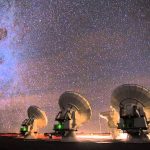
Situated at an altitude of over 4,000 meters on Maunakea in Hawaii, the Submillimeter Array is a world-class radio interferometer operated as a joint venture between the Smithsonian Astrophysical Observatory and the Academia Sinica Institute of Astronomy and Astrophysics. It consists of eight 6-meter antennas that work in concert as a single, powerful telescope, observing frequencies from 180 GHz to 418 GHz to investigate the cold dust and gas associated with star formation and planet formation.
International Observing Networks
Beyond its own facilities, the Center participates in numerous international collaborations, utilizing observatories in Chile (such as the Magellan Telescopes), Hawaii, Arizona, Antarctica, Greenland, and Europe. The global nature of modern astronomy means that many of the most significant discoveries are the result of multi-institution cooperation across multiple continents.
Major Scientific Centers and Data Infrastructure
Beyond its observatories and research divisions, the Center operates several globally essential scientific infrastructure systems that serve the international community.
Astrophysics Data System (ADS)
The NASA Astrophysics Data System (ADS) is perhaps the most influential digital library in the scientific world. Operated for NASA by the Smithsonian Astrophysical Observatory, ADS provides indexing and access to millions of research papers, historical publications, and citation networks across astronomy and physics. It is an indispensable tool that allows researchers to track the evolution of scientific ideas across more than a century of literature.
Minor Planet Center (MPC)
Operating under the auspices of the International Astronomical Union (IAU) and managed by the Smithsonian Astrophysical Observatory, the Minor Planet Center serves as the global clearinghouse for asteroid and comet tracking. It processes observational data from thousands of observatories worldwide to calculate orbital trajectories and perform planetary defense monitoring, identifying objects that may pose a risk to Earth.
Chandra X-ray Center (CXC)
The Chandra X-ray Center is responsible for the scientific operations, data processing, and user support for the Chandra X-ray Observatory. Since its launch in 1999, Chandra has provided unprecedented X-ray resolution, allowing scientists to study the physics of supermassive black holes, the remnants of supernova explosions, and the extreme environments of neutron stars. The expertise housed at the CXC ensures that these high-energy data sets are accessible to the global research community.
Final Thoughts and Legacy
The Center for Astrophysics | Harvard & Smithsonian has influenced virtually every major field in modern space science.
As astronomy enters an increasingly data-driven and technology-intensive era, the Center remains a central pillar of global scientific progress, bridging the historical achievements of the past with the next generation of deep universe exploration.
Its ongoing work in artificial intelligence, multi-messenger astrophysics, and next-generation telescope technology ensures that it will continue to define the future of space science for decades to come.