June 2026 — United States
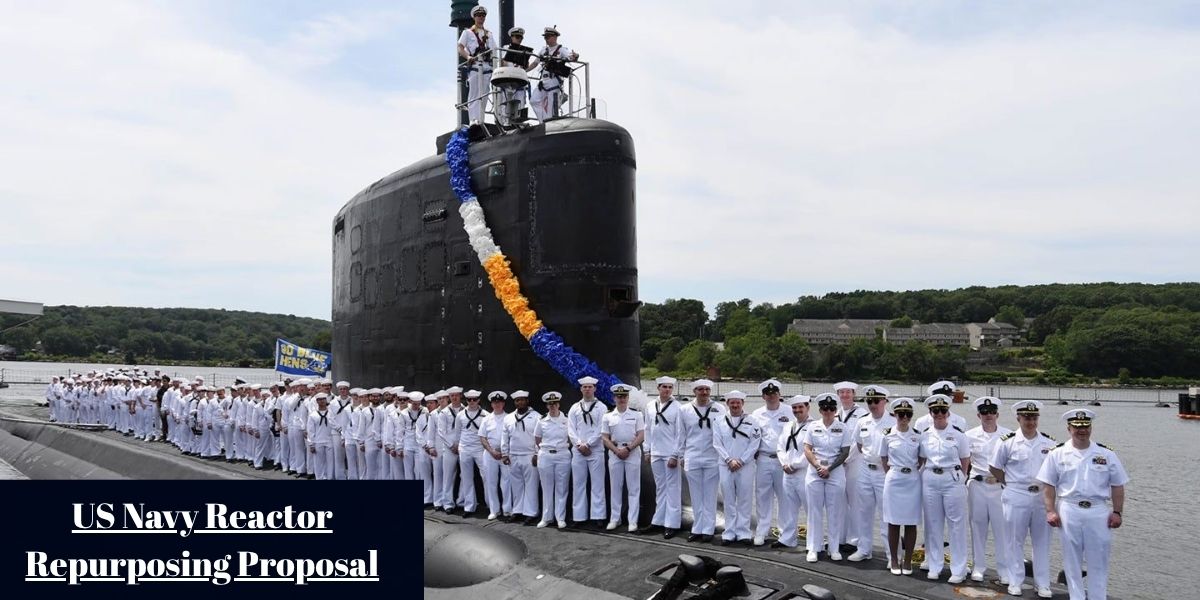
In June 2026, the energy sector focused on a notable private sector development involving HGP Intelligent Energy. This Texas-based company submitted an unsolicited proposal to the U.S. Department of Energy (DOE). The core concept involves the potential repurposing of decommissioned U.S. Navy nuclear reactors to provide electricity for civilian data center infrastructure.
The proposal identifies a potential pilot location in Oak Ridge, Tennessee. This site was selected due to its deep historical ties to American nuclear research and its existing energy science institutions.
While the proposal captures attention due to the extreme power needs of modern data centers, it is critical to clarify that this remains a non-binding concept. No federal program exists to support this, and the proposal has not been approved or endorsed by the DOE or the U.S. Navy. It operates entirely outside of existing government procurement or energy planning frameworks.
Private Sector Proposal for Nuclear-Powered Data Centers
The driving force behind this proposal is the massive growth in electricity demand from hyperscale data centers. These facilities power advanced Artificial Intelligence (AI) workloads, cloud computing platforms, and high-performance computing clusters that require stable, high-density power.
HGP Intelligent Energy posits that retired naval reactors, originally built for decades of operation in compact military vessels, could be adapted for civilian use. The argument is that these reactors offer a proven, high-density power source that could bypass the long lead times associated with grid expansion or the construction of massive, traditional power plants.
However, the commercial feasibility of this model has not been validated by any government agency. The proposal serves as an industry inquiry into alternative pathways for power generation, though it lacks the necessary federal support or regulatory approval to progress beyond the conceptual phase.
Technical Reality of Naval Nuclear Reactors
All nuclear reactors used by the U.S. Navy are managed by the Naval Nuclear Propulsion Program. This program holds singular authority over the design, operation, and lifecycle of nuclear systems used in submarines and aircraft carriers.
The fundamental design philosophy of a military reactor is defense mobility. These units are built to be compact, operate at extremely high power densities, and function in high-shock environments.
These reactors also feature sealed-core configurations. This engineering choice allows them to function for a decade or more without traditional refueling cycles, which is necessary for vessels operating globally.
Civilian power reactors prioritize different outcomes. They are engineered for stable thermal output and continuous, long-term generation within a stationary, regulated civilian grid. The design constraints for a vessel in the middle of an ocean are essentially the opposite of those for a power plant bolted to a concrete foundation on land.
Engineering Gap Between Military and Civilian Reactor Systems
Converting a military propulsion reactor into a civilian power plant is not a matter of simply plugging it into a grid. Several critical engineering discrepancies complicate the transition.
The fuel architecture used in these systems is fundamentally different. Naval reactors rely on highly specialized uranium fuel. This provides the density required for military missions but involves security and non-proliferation protocols that are significantly more restrictive than those applied to civilian light-water reactors.
The operational profiles also diverge sharply. Military reactors must be capable of variable output to handle the sudden power demands of a ship accelerating. Civilian reactors are optimized for steady-state production.
Finally, the maintenance and lifecycle requirements differ. Naval systems are designed as sealed units. Civilian plants require regular access for inspections, safety evaluations, and refueling under the strict guidelines of the Nuclear Regulatory Commission (NRC).
To bridge this gap, one would need to address the following:
- Extensive cooling system modifications to convert shipboard propulsion power to grid-ready electricity.
- The total replacement of control systems to match civilian safety standards.
- The resolution of fuel-type conflicts that currently prevent civilian entities from operating highly enriched systems.
Regulatory and Security Barriers Facing the Proposal
Even if the engineering challenges were solved, the regulatory hurdles are significant. Currently, U.S. naval nuclear technology is managed under the strict oversight of the military and the Department of Energy. Transitioning such technology to civilian use requires moving it into the oversight jurisdiction of the NRC.
This change would force a complete recertification of the reactor design. The hardware would need to meet current civilian safety codes, which were developed long after most of these naval designs were finalized.
National security policy also dictates that defense-related nuclear technology is not for open market use. The risk of proliferation is a primary concern for policymakers. Current laws effectively prohibit the transfer of such sensitive defense technology into the private sector, and any change to this policy would require significant legislative action rather than a simple corporate proposal.
Rising Energy Demand Behind the Proposal
The HGP Intelligent Energy submission arrives at a time when the American energy landscape is under extreme pressure. Hyperscale data centers supporting Artificial Intelligence (AI) workloads, cloud platforms, and large-scale digital infrastructure have created a demand spike that traditional grid operators are struggling to accommodate.
These facilities operate on a model of continuous, high-reliability power, often referred to as baseload energy. Unlike seasonal residential demand, these data centers require consistent power delivery 24 hours a day, 365 days a year.
The reference to Oak Ridge, Tennessee in the proposal is not coincidental. As home to the Oak Ridge National Laboratory, the region remains a vital hub for advanced energy science and nuclear research. It serves as a symbolic and practical anchor for proposals aimed at reviving high-density energy solutions.
However, the strain on existing regional power grids is significant. While utility-scale solar and wind projects are expanding, their intermittent nature makes them difficult to reconcile with the instant-on, high-load requirements of massive computational facilities. This creates a market gap that HGP is attempting to address, even if the proposed military-to-civilian conversion path is legally and technically unprecedented.
U.S. Navy Energy Testing and Grid Resilience Work
It is essential to distinguish the private proposal from actual, ongoing U.S. Navy energy initiatives. The Navy has conducted operational tests involving nuclear-powered aircraft carriers, such as the USS Gerald R. Ford, to assess their potential for providing shore-based power.
These tests aim to enhance energy resilience at naval installations. By plugging a vessel into the base electrical grid, the Navy can ensure operational continuity during major disruptions to civilian power infrastructure.
These initiatives are strictly contained within the bounds of military readiness and base support. They do not involve the removal of reactors, the decommissioning of propulsion systems, or the export of nuclear energy to the civilian commercial market. Any reporting that conflates these military readiness tests with the HGP proposal misrepresents the specific, mission-critical nature of the Navy’s own energy research.
Strategic View on Nuclear Repurposing Ideas
Energy analysts and defense policy experts increasingly view the HGP Intelligent Energy submission as symptomatic of a wider trend. Private-sector entities are actively seeking unconventional nuclear pathways to escape the bottlenecks of modern energy markets.
When these experts evaluate the potential for nuclear innovation inspired by naval reactor design, they consistently point to a different solution. The consensus is that the most viable pathway is not the recycling of old, sealed military cores, but the development of purpose-built Small Modular Reactors (SMRs).
These SMRs provide a critical advantage over the repurposed military model:
- They operate within an existing NRC-regulated framework specifically built for civilian safety and oversight.
- They utilize fuel cycles compatible with civilian security and non-proliferation standards.
- They are designed from the ground up for grid integration and commercial maintenance, eliminating the need to adapt a vessel-based propulsion system to a land-based power station.
Final Reality Check on the Proposal
At this juncture, the HGP Intelligent Energy submission remains an unsolicited conceptual proposal. It possesses no official status, government endorsement, or validated pathway toward implementation.
The reality remains that U.S. naval nuclear reactors are governed by a closed-loop system under the Naval Nuclear Propulsion Program. They are assets designed for the specific, extreme environments of naval warfare and are retired according to protocols that ensure environmental safety and security, not commercial resource recovery.
While the proposal highlights the growing industrial urgency surrounding energy supply for digital infrastructure, it does not constitute an active government initiative. The future of nuclear-powered data centers will likely rely on the maturation of commercial-grade Small Modular Reactors rather than the repurposing of retired military hardware. The proposal serves as a barometer for market demand, but it stops short of being a functional blueprint for American energy policy.