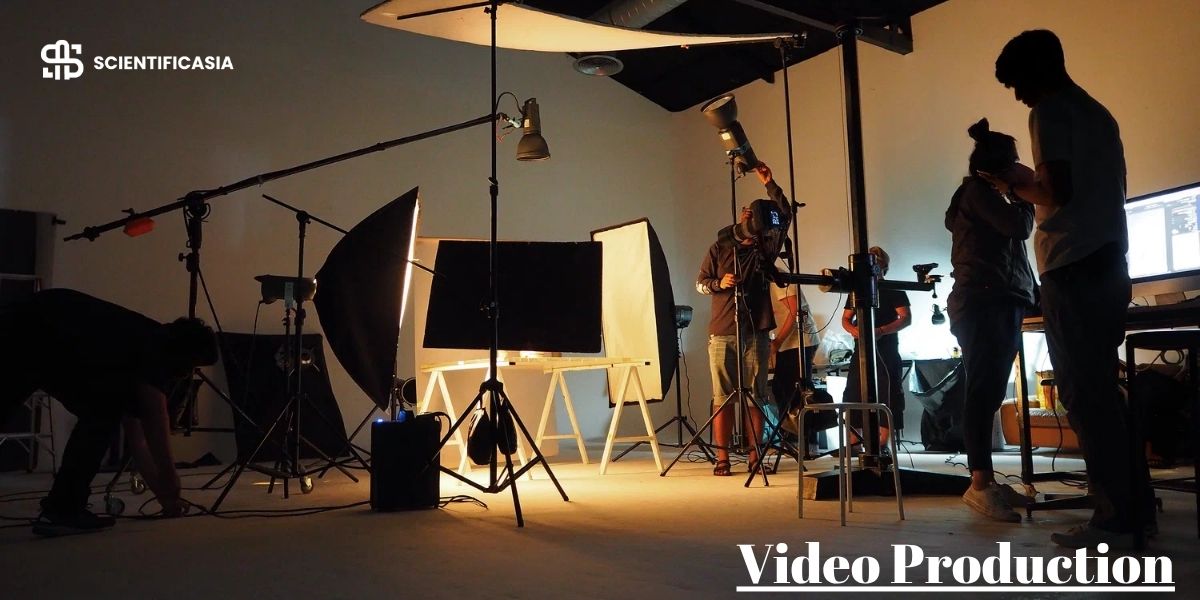
There was a time when video production followed a clear arc, plan, produce, publish and move on. Each piece of content was treated as a finished product, something carefully crafted to stand on its own and deliver impact over time. For filmmakers, educators and brands alike, the goal was simple: make one great video and let it do the work.
That model no longer holds.
Today, attention is fluid, platforms are relentless, and audiences expect more than isolated moments of engagement. A single video, no matter how well executed, struggles to maintain visibility in an environment defined by constant motion. The shift isn’t subtle, it’s structural. Video is no longer a one-time effort. It’s an ongoing presence.
Why the Traditional Model Is Losing Relevance
The traditional production model was built on scarcity. Limited budgets, time constraints, and complex workflows meant that every video carried weight. You invested heavily in one output because you had to.
But the digital ecosystem has changed the rules. Content is no longer consumed in intervals, it’s consumed continuously. Feeds refresh, trends evolve and audiences move quickly from one piece of content to the next. In this environment, even exceptional work has a short lifespan if it isn’t supported by consistent follow-up.
This doesn’t diminish the importance of quality. It reframes the role of frequency. A great video can still create impact, but without continuity, that impact fades faster than it should.
From Finished Outputs to Ongoing Systems
The most significant shift happening today is conceptual. Creators are moving away from thinking in terms of individual projects and toward thinking in terms of systems.
This is where Moving from campaigns to ongoing content systems becomes a practical reality rather than a theoretical idea. Instead of building one piece and starting over, creators are learning to extend, adapt and evolve their work over time.
A single idea is no longer confined to one execution. It becomes a foundation, something that can be reshaped, reinterpreted and redistributed across formats and platforms. This approach doesn’t dilute creativity; it amplifies it by allowing ideas to live longer and reach further.
The Pressure Behind the Shift
For many creators, this transition isn’t driven by choice, it’s driven by necessity. The demand for content has increased, but the resources available to produce it haven’t scaled at the same pace.
Marketers are expected to deliver consistent output. Small businesses need to stay visible without expanding teams. Independent creators must maintain relevance without burning out. The gap between expectation and capacity is what makes the traditional model unsustainable.
Continuous content creation addresses this gap, but only if the process itself becomes more efficient. Without that efficiency, consistency turns into exhaustion.
Where AI Video Changes the Equation
This is where technology begins to play a meaningful role not as a replacement for creativity, but as a way to support it.
Platforms like Higgsfield are designed to reduce the friction that typically slows down video production. By using an AI video generator, creators can take a single concept and expand it into multiple outputs without rebuilding the entire workflow each time.
This shift is subtle but powerful. Instead of starting from zero for every new piece, you begin with momentum. The core idea remains intact while the execution becomes flexible. Higgsfield enables this flexibility in a way that feels aligned with creative intent rather than disruptive to it.
Rethinking the Creative Process
The move toward continuous content creation requires a different approach to creativity. In the traditional model, the process is linear: concept, production, and delivery. Each stage is distinct, and the end result is fixed.
In a continuous model, the process becomes iterative. Ideas are explored rather than finalized. Content is released earlier, refined over time, and adapted based on context and response.
This doesn’t mean abandoning craft. It means redefining it. Precision still matters, but it exists within a broader system where adaptability is equally important. An AI video generator supports this shift by making iteration faster and less resource-intensive, allowing creators to stay engaged with their ideas instead of moving on prematurely.
The Expansion of a Single Idea
One of the most valuable aspects of continuous creation is the ability to expand a single idea into multiple expressions. What was once a single output can now become a sequence of related pieces, each serving a different purpose.
A concept might begin as a core narrative and evolve into shorter clips, alternate versions or platform-specific adaptations. This approach increases both reach and relevance without requiring entirely new concepts for each piece of content.
Higgsfield supports this kind of expansion by maintaining consistency across outputs while allowing for variation. An AI video generator makes it possible to explore these variations efficiently, turning one idea into an ecosystem rather than a standalone asset.
Consistency as a Strategic Advantage
In a content-driven environment, consistency has become one of the most valuable assets a creator can have. It builds familiarity, reinforces identity, and keeps audiences engaged over time.
However, consistency is difficult to maintain using traditional production methods. The effort required to produce each video from scratch creates natural gaps between outputs.
An AI video generator reduces those gaps by streamlining the creation process. Instead of rebuilding every time, creators can build on what already exists. Higgsfield enhances this by ensuring that increased output doesn’t come at the expense of quality or coherence.
The Role of Momentum in Modern Creation
Momentum is an often overlooked factor in creative work. In traditional workflows, momentum is frequently lost between projects. Each new video requires a reset, new planning, new production, and new execution.
Continuous content creation preserves momentum. Ideas carry forward, evolving rather than restarting. This creates a more natural and sustainable rhythm, where output becomes a byproduct of ongoing exploration rather than isolated effort.
An AI video generator plays a critical role here by removing repetitive friction. Higgsfield allows creators to stay within their creative flow, extending ideas instead of abandoning them.
Audience Expectations Have Changed
The shift toward continuous content creation is also driven by changing audience behavior. Viewers no longer engage with content in isolated moments. They follow creators, narratives, and themes over time.
This creates an expectation of continuity. Audiences look for updates, variations, and new perspectives. They engage more deeply with creators who maintain a consistent presence rather than those who appear sporadically.
Insights from short-form video trends for brands reinforce this pattern, showing that ongoing engagement significantly outperforms one-time content drops. In this context, visibility is not just about quality; it’s about persistence.
Balancing Quality and Quantity
One of the most common concerns about continuous creation is the potential trade-off between quality and quantity. Producing more content can feel like compromising standards.
However, this trade-off is not inevitable. With the right tools and approach, it’s possible to maintain quality while increasing output. An AI video generator enables this by simplifying execution without limiting creative control.
Higgsfield contributes to this balance by providing a framework where creators can scale their output while preserving their visual identity and narrative intent. The goal is not to produce more for the sake of it, but to create more opportunities for engagement.
A More Sustainable Way to Create
Sustainability is becoming a key consideration in content creation. The traditional model, with its heavy reliance on intensive production cycles, is difficult to maintain over time.
Continuous creation offers a more sustainable alternative, particularly when supported by efficient tools. By reducing the effort required for each new piece of content, creators can maintain consistency without experiencing burnout.
An AI video generator helps distribute effort more evenly, turning creation into an ongoing process rather than a series of high-pressure projects. Higgsfield supports this by making that process feel manageable and aligned with creative goals.
Looking Ahead
The shift from one-time production to continuous creation is not a passing trend. It reflects a deeper change in how content is created, distributed and consumed.
As this model becomes more established, creators who adapt early will have a clear advantage. They will be better positioned to maintain visibility, build stronger connections with their audiences, and respond to changing dynamics in real time.
Tools like Higgsfield and the broader category of AI video generator platforms will continue to play a central role in this transition. They provide the infrastructure needed to support a more fluid, responsive and scalable approach to storytelling.
Final Thoughts
The evolution of video creation is not about abandoning what worked in the past. It’s about expanding it.
One-time production will always have its place. There will always be a need for carefully crafted, high-impact pieces. But those pieces are no longer enough on their own.
To remain relevant, creators need continuity. They need systems that allow their ideas to extend beyond a single moment. They need the ability to stay present in a constantly moving environment.
Continuous content creation offers that possibility. And with the support of tools like Higgsfield and an AI video generator, it becomes not just achievable, but sustainable.
The shift is already happening. The only question is how quickly creators are willing to adapt.